Most patient copays $0-$22

Why Blossom Health
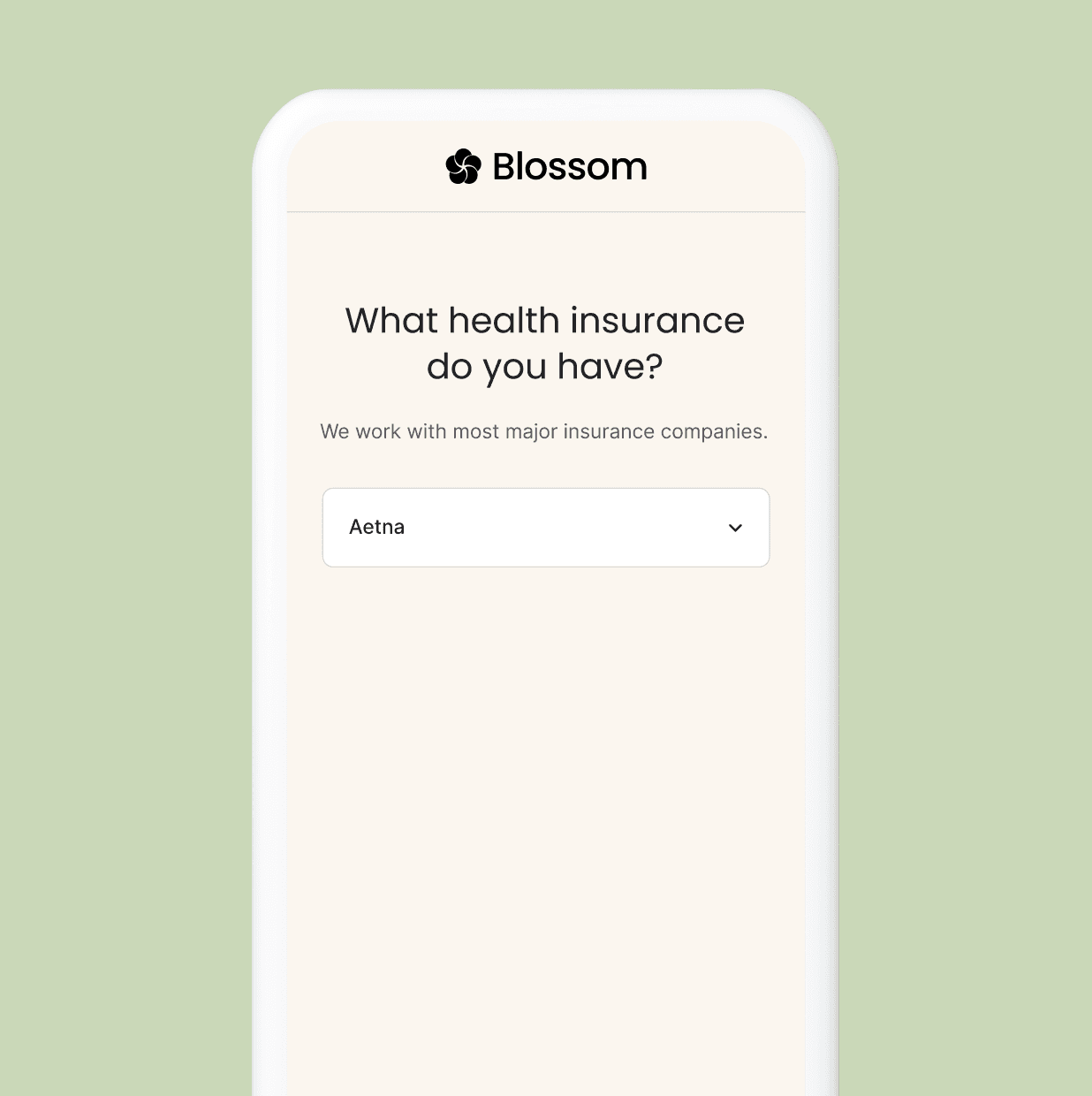
Care that’s covered
All our psychiatrists take insurance.
Flexible Scheduling
Virtual visits make showing up easy.
Responsible prescribing
Medication, only as needed.

What we specialize in
The core mental health conditions we treat.

How it works
What is Blossom Health?
Who is Blossom Health for?
Where does Blossom Health operate?
How do I sign up and schedule my first session?
What do I need to do prior to my first session?
What will my first appointment be like?

What is Bupropion (Wellbutrin)?
Bupropion is a prescription antidepressant that belongs to a class of medications called norepinephrine-dopamine reuptake inhibitors (NDRIs). Bupropion works by increasing the amounts of norepinephrine and dopamine—neurotransmitters that help regulate mood, energy, motivation, and focus—available in the brain.
Unlike SSRIs that target serotonin, bupropion specifically affects norepinephrine and dopamine without significantly impacting serotonin levels. This unique mechanism typically results in a different side effect profile, including a lower risk of sexual side effects and weight gain compared to SSRIs.
When you take bupropion, it blocks the reuptake (reabsorption) of norepinephrine and dopamine by nerve cells, allowing more of these mood-regulating chemicals to remain active in the spaces between neurons. This increased activity can help improve mood, increase energy, enhance concentration, and alleviate other symptoms of mental health conditions.
Uses and Conditions of Wellbutrin
Alternative Treatment Options
If bupropion isn't the right fit for you, numerous effective alternatives exist for treating depression.
SSRI Medications
Sertraline (Zoloft): Effective for depression and multiple anxiety disorders.
Fluoxetine (Prozac): Long half-life and FDA-approved for several conditions including depression and OCD.
Escitalopram (Lexapro): Studies suggest it may have fewer side effects than some other SSRIs.
Other Antidepressant Classes
Venlafaxine (Effexor): An SNRI that affects both serotonin and norepinephrine.
Mirtazapine (Remeron): May help with sleep and appetite while treating depression.
Duloxetine (Cymbalta): An SNRI also approved for certain pain conditions.