
Anxiety can make you feel dizzy in several ways, like breathing too fast, changes in blood flow, inner ear sensitivity, or your body’s stress response kicking in. It can feel scary, but anxiety-related dizziness isn’t usually dangerous and often improves when the anxiety is treated.
Understanding why anxiety causes dizziness and how to distinguish it from other medical conditions can help you manage these unsettling symptoms more effectively. Dizziness is one of the most common physical symptoms associated with anxiety disorders, affecting a significant portion of people who experience panic attacks or chronic anxiety.
Key Takeaways
Anxiety causes real dizziness through biological mechanisms: Hyperventilation, blood flow changes, and stress hormone release during anxiety all affect balance systems, creating genuine lightheadedness or vertigo that isn't "just in your head."
Multiple types of dizziness can occur: Anxiety can cause lightheadedness, feeling off-balance, vertigo (spinning sensation), or "brain fog," depending on which physiological systems are most affected during the anxiety response.
Treatment addresses both anxiety and symptoms: Managing underlying anxiety through therapy, medication, breathing exercises, and vestibular rehabilitation can significantly reduce or eliminate dizziness, though ruling out other medical causes remains important.
How Anxiety Causes Dizziness
When you experience anxiety, your body activates the "fight or flight" response, triggering a cascade of physiological changes designed to help you respond to perceived threats. Several of these changes directly affect your balance and spatial orientation systems.
Hyperventilation and Breathing Changes
One of the primary ways anxiety causes dizziness is through altered breathing patterns. During anxiety or panic attacks, many people unconsciously hyperventilate, breathing too quickly or deeply, which disrupts the balance of oxygen and carbon dioxide in their blood.
How hyperventilation causes dizziness:
Rapid breathing expels too much carbon dioxide
This causes blood vessels in the brain to constrict
Reduced blood flow to the brain creates lightheadedness
Changes in blood pH affect nerve function and sensation
Research shows that hyperventilation can reproduce many anxiety symptoms, including dizziness, tingling, and feelings of unreality. Even subtle increases in breathing rate that you don't notice can trigger these effects.
Changes in Blood Pressure and Circulation
Anxiety affects your heart and blood flow in ways that can throw off your balance. When you’re stressed, your heart rate speeds up, and blood vessels tighten, changing how blood moves through your body.
Cardiovascular mechanisms of anxiety-related dizziness:
Blood pressure fluctuations affecting brain flowBlood pooling in large muscles
Reduced blood flow to the vestibular system (inner ear balance organs)
Changes in heart rate
For some people, anxiety can make lightheadedness worse when standing up quickly, because stress can interfere with how the body regulates blood pressure.
Vestibular System Sensitivity
Your vestibular system in the inner ear maintains balance and spatial orientation. Anxiety can increase the sensitivity of this system or interfere with how the brain processes balance information.
Research suggests that people with anxiety disorders may have heightened vestibular sensitivity, meaning normal movements and balance sensations feel more intense or uncomfortable. This can create dizziness even without actual balance system dysfunction.
Muscle Tension
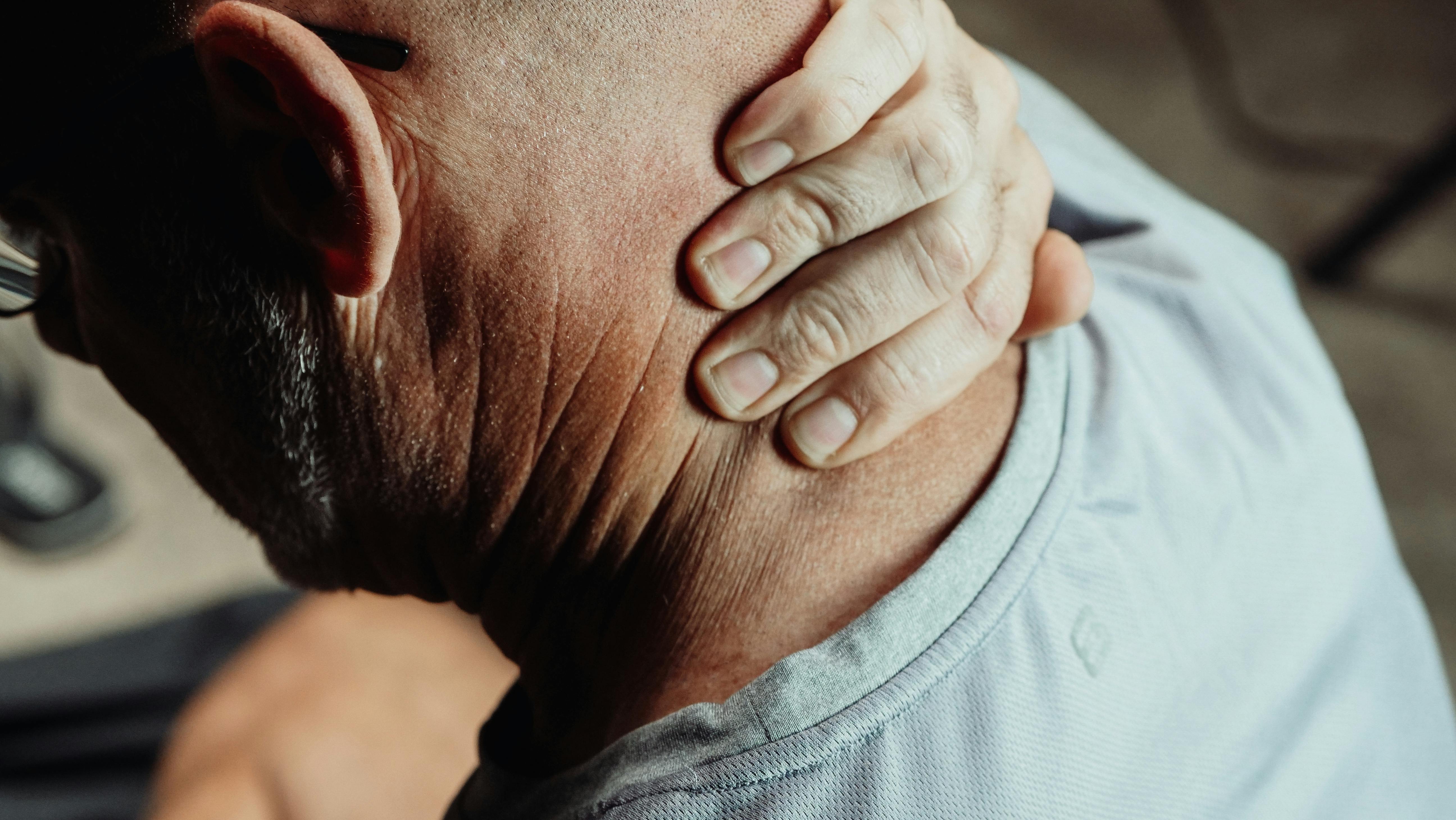
Chronic muscle tension, particularly in the neck and shoulders, commonly accompanies anxiety. This tension can affect blood flow to the head and compress nerves, contributing to dizzy sensations. Tension in neck muscles specifically can interfere with proprioception (your body's sense of position in space), creating feelings of imbalance or disorientation.
Stress Hormones and Brain Chemistry
Anxiety triggers the release of stress hormones, including adrenaline and cortisol. These hormones affect numerous body systems, including those that regulate balance, blood pressure, and sensory processing.
Anxiety-related changes in brain chemicals, especially serotonin, which affects both mood and balance, can also contribute to feeling dizzy.
Types of Dizziness Associated with Anxiety
Anxiety can cause several distinct types of dizzy sensations, and identifying which type you experience can guide treatment approaches.
Lightheadedness
The most common anxiety-related dizziness is lightheadedness, a feeling that you might faint or pass out, though actual fainting from anxiety alone is quite rare. This sensation typically results from hyperventilation or blood flow changes.
Lightheadedness associated with anxiety often:
Comes in waves rather than being constant
Improves with controlled breathing
Worsens during anxiety peaks
Rarely leads to actual fainting
Vertigo (Spinning Sensation)
Some people with anxiety experience true vertigo, a sensation that you or your surroundings are spinning or moving. While vertigo more commonly indicates inner ear problems, anxiety can trigger or worsen vertigo episodes.
Anxiety-related vertigo typically:
Occurs during panic attacks or high anxiety
May be triggered by certain movements or positions
Improves when anxiety decreases
Doesn't usually include hearing loss (unlike many inner ear disorders)
Unsteadiness and Imbalance
A feeling of being off-balance, unstable, or disconnected from the ground affects many people with chronic anxiety. This sensation often relates to muscle tension, proprioception changes, or heightened awareness of normal balance sensations.
Derealization and Dissociation
Some people describe anxiety-related dizziness as feeling disconnected from reality, spacey, or like they're in a fog. This represents derealization or dissociation—alterations in perception that can accompany severe anxiety—rather than true dizziness, though the sensations often overlap.
Dizziness During Panic Attacks
According to DSM-5 criteria for panic disorder, dizziness is one of the 13 possible panic attack symptoms, alongside racing heart, sweating, trembling, and shortness of breath.
Why panic attack dizziness feels intense:
Rapid onset of hyperventilation
Dramatic blood pressure and heart rate changes
Extreme muscle tension developing quickly
Fear response amplifying awareness of physical sensations
Hypervigilance to bodily sensations creating feedback loop
Feeling dizzy during a panic attack can make you worry that something serious is wrong, which then fuels the panic and keeps the cycle going.
Distinguishing Anxiety-Related Dizziness from Other Causes
While anxiety commonly causes dizziness, other medical conditions can produce similar symptoms. Distinguishing between causes is important for appropriate treatment.
Characteristics of Anxiety-Related Dizziness
Common features include:
Onset coinciding with anxiety symptoms or anxious thoughts
Improvement when anxiety decreases or with breathing exercises
No hearing loss, tinnitus, or ear fullness (suggests inner ear problem)
Worse in anxiety-provoking situations
Associated with other anxiety symptoms (racing heart, difficulty breathing, sweating)
Inconsistent patterns that vary day-to-day
Medical Conditions That Cause Dizziness
Inner ear disorders:
Benign paroxysmal positional vertigo (BPPV)
Ménière's disease
Vestibular neuritis or labyrinthitis
Vestibular migraine
Cardiovascular issues:
Arrhythmias (Irregular heartbeat)
Orthostatic hypotension (Blood pressure drops when standing)
Heart valve problems
Neurological conditions:
Migraine-associated vertigo
Multiple sclerosis
Stroke or TIA (Especially with sudden onset)
Other causes:
Medication side effects
Dehydration
Low blood sugar
Anemia
Thyroid disorders
When to Seek Medical Evaluation
Seek medical attention if you experience:
Sudden onset of severe dizziness or vertigo
Dizziness accompanied by hearing loss or a severe headache
Inability to walk or stand due to dizziness
Dizziness with chest pain, numbness, or difficulty speaking
Persistent dizziness that doesn't improve
New onset of dizziness in someone over 50 without a history of anxiety
Dizziness following head injury
Healthcare providers can perform specific tests, including vestibular function tests, hearing assessments, and cardiovascular evaluation, to rule out non-anxiety causes.
Why Anxiety Can Cause Dizziness
Anxiety and dizziness often create a self-perpetuating cycle that can be challenging to break without intervention.
How the Cycle Works
Initial trigger: Anxiety activates the stress response, causing physiological changes that create dizziness.
Symptom awareness: You notice the dizzy sensation and focus attention on it.
Catastrophic interpretation: Your mind interprets dizziness as dangerous ("I'm going to faint," "Something is seriously wrong").
Increased anxiety: Fear of dizziness triggers more anxiety.
Worsening symptoms: Higher anxiety intensifies the physiological responses, causing dizziness.
Avoidance behaviors: You begin avoiding situations where you've felt dizzy, reinforcing fear.
This cycle can develop into specific phobias about dizziness or situations where dizziness occurred, leading to increasingly restricted activities and worsening anxiety.
Breaking the Cycle
Interrupting the anxiety-dizziness cycle requires addressing both the physical symptoms and the fear response:
Effective strategies include:
Learning controlled breathing techniques to prevent hyperventilation
Cognitive restructuring to challenge catastrophic thoughts about dizziness
Gradual exposure to situations that trigger dizziness
Understanding that anxiety-related dizziness isn't dangerous
Practicing mindfulness to observe sensations without panic
Managing and Treating Anxiety-Related Dizziness
Breathing Techniques
Since hyperventilation commonly causes anxiety-related dizziness, learning proper breathing techniques provides immediate relief and prevention.
Effective breathing exercises:
Diaphragmatic breathing: Breathe deeply into your belly rather than shallow chest breathing. Place one hand on your chest and one on your abdomen; the abdomen should rise more than the chest.
4-7-8 breathing: Inhale for 4 counts, hold for 7 counts, exhale for 8 counts. This pattern naturally slows breathing and prevents hyperventilation.
Box breathing: Inhale for 4 counts, hold for 4, exhale for 4, hold for 4. Repeat for several cycles.
Cognitive-Behavioral Therapy (CBT)
CBT is highly effective for anxiety disorders and specifically addresses the thoughts and behaviors that maintain the anxiety-dizziness cycle.
CBT techniques for anxiety-related dizziness:
Identifying and challenging catastrophic thoughts about dizziness
Gradual exposure to situations that trigger dizziness
Learning to tolerate uncomfortable sensations without panic
Developing realistic appraisals of danger
Studies show that CBT focused on health anxiety and physical symptoms can greatly reduce dizziness in people with anxiety.
Vestibular Rehabilitation
For people with persistent dizziness related to anxiety, vestibular rehabilitation therapy (VRT) can be helpful. This therapy uses specific exercises to improve balance and reduce dizziness sensitivity.
VRT exercises often include:
Head and eye movement exercises
Balance training activities
Habituation exercises that gradually expose you to movements that trigger dizziness
Gait and posture training
Medications
Medications for anxiety often reduce or eliminate dizziness as the underlying anxiety improves.
Common medications that may help:
SSRIs (Selective serotonin reuptake inhibitors) like sertraline, escitalopram, or paroxetine treat anxiety and can reduce associated dizziness over time. These typically take 4-6 weeks for full effect.
SNRIs (Serotonin-norepinephrine reuptake inhibitors) like venlafaxine treat both anxiety and physical symptoms.
Buspirone is a non-addictive anti-anxiety medication that may help reduce dizziness without sedation.
Benzodiazepines like clonazepam can provide rapid relief but carry risks of dependence and are typically reserved for short-term use.
Some medications specifically for dizziness, like meclizine, may provide temporary relief but don't address underlying anxiety and can cause sedation that worsens the problem long-term.
Lifestyle Modifications
Beneficial lifestyle modifications include:
Regular exercise to reduce anxiety and improve cardiovascular fitness
Adequate hydration to maintain blood pressure and circulation
Limiting caffeine, which can trigger anxiety and dizziness
Consistent sleep schedule to reduce anxiety and support balance systems
Stress management practices like meditation or yoga
Avoiding alcohol, which can worsen both anxiety and dizziness
Grounding Techniques
When dizziness occurs, grounding techniques help you stay present and reduce anxiety escalation:
Immediate relief strategies:
Focus on a fixed point in your environment
Use the 5-4-3-2-1 technique (identify 5 things you see, 4 you hear, 3 you touch, 2 you smell, 1 you taste)
Press your feet firmly into the floor to increase proprioceptive input
Hold a cool object or splash cool water on your face
Engage in a simple mental task like counting backward or naming colors
Long-Term Outlook for Anxiety-Related Dizziness
With the right treatment, most people see a big improvement in anxiety-related dizziness. When both anxiety and dizziness are treated, the outlook is usually very good.
Factors that improve outcomes:
Early recognition and treatment of anxiety
Learning and consistently practicing coping strategies
Addressing catastrophic thoughts about dizziness
Continuing with exposure to previously avoided situations
Treating any co-occurring mental health conditions
Research shows that people who engage in comprehensive treatment, including therapy, breathing retraining, and appropriate medication, see substantial reductions in dizziness severity and frequency over several months.
Work with a Psychiatrist through Blossom Health
If anxiety-related dizziness is affecting your daily life, professional mental health treatment can provide significant relief. Blossom Health connects you with board-certified psychiatrists who understand the physical manifestations of anxiety and can develop comprehensive treatment plans that address both the psychological and physical aspects of your symptoms.
Our psychiatric providers offer medication management, treatment recommendations, and coordination with other specialists when needed, all through convenient virtual appointments covered by in-network insurance. Get started.
Medical Disclaimer
This article is for informational purposes only and is not a substitute for professional medical advice, diagnosis, or treatment. Always seek the advice of your physician or other qualified healthcare provider with any questions you may have regarding a medical condition. If you are experiencing a mental health crisis, contact the 988 Suicide and Crisis Lifeline by calling or texting 988, or call 911 for immediate assistance.
Sources
Anxiety and Depression Association of America (ADAA). Physical Symptoms of Anxiety. https://adaa.org/understanding-anxiety/related-illnesses/other-related-conditions/stress/physical-activity-reduces-st
Academy of Neurologic Physical Therapy. Anxiety and Dizziness. https://www.neuropt.org/docs/default-source/vestibular-sig/vsig-physician-fact-sheets/anxiety-and-dizziness.pdf?sfvrsn=bf735343_0
Mayo Clinic. Dizziness. https://www.mayoclinic.org/diseases-conditions/dizziness/symptoms-causes/syc-20371787
CalmClinic: Hyperventilation: The Anxiety Attack Symptom. https://www.calmclinic.com/anxiety/symptoms/hyperventilation
Furman, J. M.; Balaban, C. D.; Jacob, R. G. 2001. Interface Between Vestibular Dysfunction and Anxiety: More Than Just Psychogenicity. Otology & Neurotology. https://journals.lww.com/otology-neurotology/fulltext/2001/05000/interface_between_vestibular_dysfunction_and.35.aspx
Bentley TGK, D'Andrea-Penna G, Rakic M, Arce N, LaFaille M, Berman R, Cooley K, Sprimont P. 2023. Breathing Practices for Stress and Anxiety Reduction: Conceptual Framework of Implementation Guidelines Based on a Systematic Review of the Published Literature. Brain Sci. https://pmc.ncbi.nlm.nih.gov/articles/PMC10741869/
American Speech-Language-Hearing Association. Dizziness and Balance. https://www.asha.org/public/hearing/dizziness-and-balance/?srsltid=AfmBOoo3DAL2fpPd_0pkALtKq-GSwM6I_07QJiqWK1NBjOrcdzqSd6t7
National Institute of Mental Health (NIMH). Anxiety Disorders. https://www.nimh.nih.gov/health/topics/anxiety-disorders
Jeongae Kang, Tsunehiko Tanaka, Chihiro Yagi, Arata Horii. 2024. Cognitive Behavioral Therapy as a Treatment Strategy for Chronic Dizziness, Equilibrium Research. https://www.jstage.jst.go.jp/article/jser/83/4/83_229/_article/-char/en#:~:text=The%20results%20showed%20improvements%20in,evaluation%20of%20their%20own%20dizziness.
American Academy of Family Physicians. Dizziness: Approach to Evaluation and Management. https://www.aafp.org/pubs/afp/issues/2017/0201/p154.html