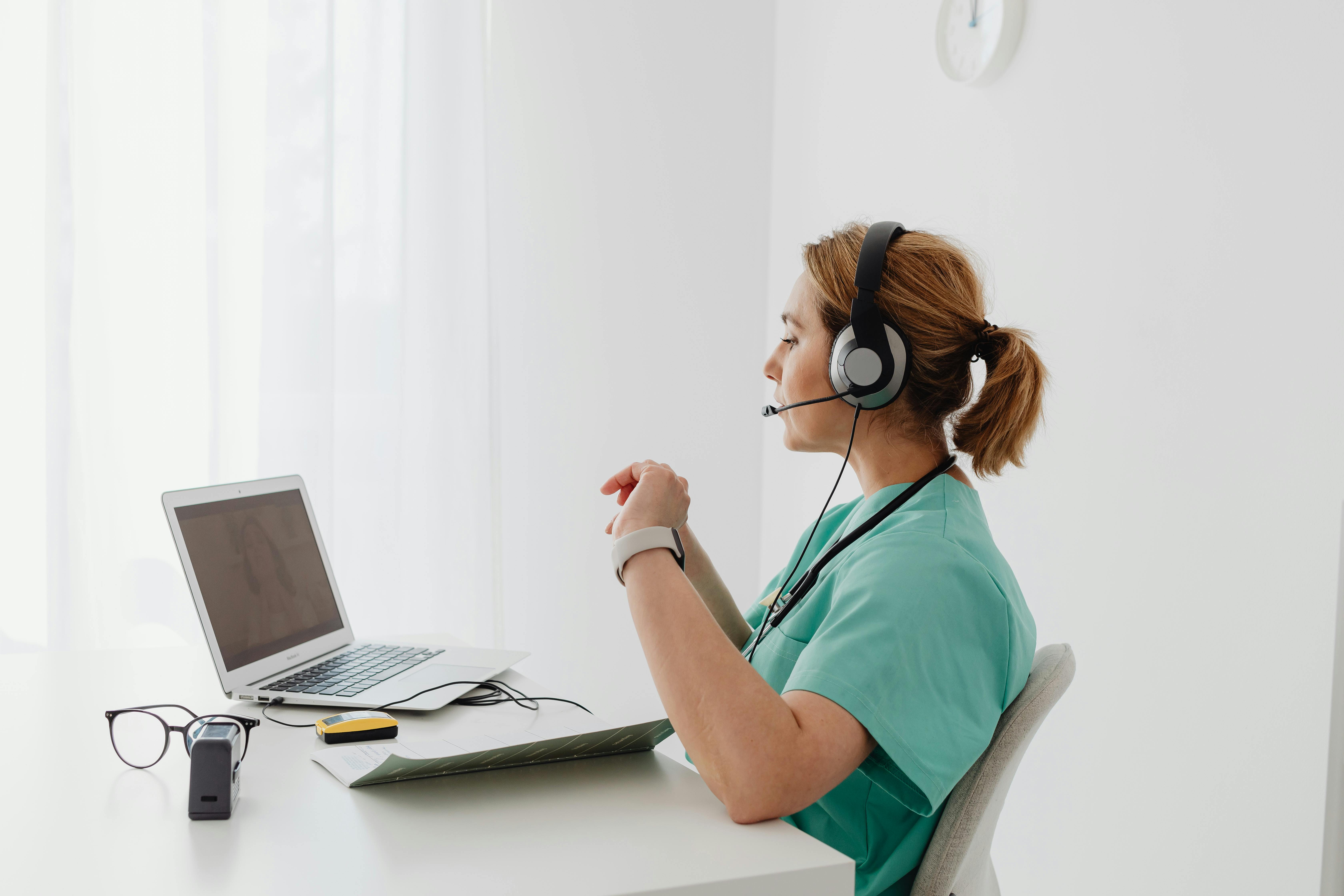
Online psychiatry makes it easier to connect with a licensed psychiatrist from home. For many people, it can reduce the long waits and travel that can be barriers to finding accessible care options.
If you’re wondering how to find an online psychiatrist who fits your needs, insurance, and schedule, this guide explains what to look for, how to check their credentials, what virtual care costs, and what to expect from your first visit.
Key Takeaways
Online psychiatry can be effective. Research suggests telepsychiatry can produce outcomes comparable to in-person care for several mental health conditions like depression, anxiety, and PTSD.
Credentials and licensing. The right provider for you is licensed in the state where you’re located, board-certified, and in-network with your insurance, and you can verify this yourself in minutes.
Access has improved: Most major insurers now cover telepsychiatry, and virtual platforms often offer appointments within days rather than the weeks or months common in traditional settings.
What Is Online Psychiatry?
Online psychiatry, also called telepsychiatry, lets you meet with a licensed psychiatric provider through secure video visits. These appointments cover the same ground as in-person care, including evaluation, diagnosis, medication management, and ongoing follow-up. Modern platforms are built so a provider can conduct a thorough assessment and adjust treatment just as they would in-person.
The clinical evidence suggests that virtual care can be effective. Multiple reviews suggest that telepsychiatry can be as effective as in-person treatment for many conditions, and patient satisfaction is often equal to or higher than face-to-face care. This is important because access to psychiatrists can be difficult for people living in rural areas. In 2019, more than 70 percent of rural counties had no psychiatrist and in 2022 this percentage dropped to 65%. Telehealth can help close this gap while making mental health care accessible for all.
Who You Will See Online: Psychiatrist, Nurse Practitioner, or PA
One thing many people don’t realize is that the prescriber behind an online psychiatry platform is not always a psychiatrist. Several types of licensed clinicians can diagnose mental health conditions and prescribe medication, and knowing the differences helps you understand the care you are getting.
Psychiatrist (MD or DO)
A psychiatrist is a physician who completed medical school followed by a four-year residency in psychiatry. Most are board-certified by the American Board of Psychiatry and Neurology (ABPN). Psychiatrists can diagnose, prescribe, order labs, and in some cases provide psychotherapy, and they carry the most extensive medical training in this space.
Psychiatric Nurse Practitioner (PMHNP)
A psychiatric-mental health nurse practitioner (PMHNP) is an advanced practice registered nurse with specialized psychiatric training, board-certified through the American Nurses Credentialing Center. In many states, PMHNPs can evaluate, diagnose, and prescribe, sometimes independently. Many quality platforms rely on PMHNPs, which is not a drawback, as these providers are highly trained.
Physician Assistant (PA-C)
A physician assistant is a licensed clinician with graduate-level training. Depending on state law and their practice setting, they may evaluate people and prescribe medications, typically in collaboration with a physician. What matters most is not the exact title but that a qualified, licensed prescriber reviews your care and that you have continuity with your provider over time.
How to Find an Online Psychiatrist Step by Step
Finding the right online psychiatric provider is worth taking some time to research. Focusing on a few key factors before scheduling can help you find care that fits your needs and avoids surprises later.
Check Insurance and Cost
Start by confirming your coverage, since it can make the biggest difference in what you pay out of pocket. Many platforms are typically in-network with major insurers, and copays are often modest.
Without insurance, an initial evaluation usually costs more than a follow-up, and prices may vary widely by provider. It's important to ask about fees before you schedule your first appointment. Medicare also covers many telehealth mental health services, though coverage details can change over time. Our guide to insurance coverage for online psychiatry explains how to verify your benefits.
Verify Credentials and State Licensing
Check that the provider is appropriately licensed and qualified to provide psychiatric care. For psychiatrists, this generally means holding an MD or DO degree followed by residency training in psychiatry. Board certification signals additional expertise.
Importantly, your provider must be licensed in the state where you’re physically located during appointments. Confirm that the platform serves your state before signing up.
Consider the Conditions They Treat
Some providers and platforms focus on particular areas, such as ADHD, trauma, or mood and anxiety disorders. If you’ve a specific concern, look for someone experienced with it. For attention-related concerns, our guide on finding an ADHD psychiatrist offers a focused starting point.
Look at Platform Features and Reviews
Consider whether you prefer video visits and whether messaging between appointments is available. Patient reviews can reveal patterns in appointment availability, prescription handling, and communication. You can look for consistent themes rather than a single review, and favor platforms with clear, secure technology.
How to Verify a Provider’s License and Certification
You don’t have to rely solely on a platform’s claim about a provider’s credentials. Verifying a provider takes only a few minutes and is one of the best ways to protect yourself. Here is how to do it.
Check the state medical board: Look up a physician’s license and any disciplinary history through the medical board in the state where you will be located. You can also search the Federation of State Medical Boards physician lookup tool.
Confirm board certification: For psychiatrists, you can use the American Board of Psychiatry and Neurology (ABPN) verifyCERT system to confirm a psychiatrist is board-certified in psychiatry.
Verify nurse practitioners and PAs separately: PMHNPs are typically verified through a state board of nursing, and physician assistants through a medical or PA board, so use the license type to find the right board.
Match the license to your state: Because virtual care depends on where you are located during the visit, confirm the provider is licensed in that state.
Regulated Telepsychiatry vs. Mental Wellness Apps
Not every mental health service available online provides the same type of care. Regulated telepsychiatry is part of the medical system, with licensed providers, structured evaluations, and evidence-based treatment. Many direct-to-consumer wellness apps operate outside that framework and may offer helpful tools but lack strong clinical oversight or a licensed prescriber.
One important difference is the initial assessment. A psychiatric evaluation typically takes 30 to 60 minutes and covers your symptom history, prior treatment, medications, and how symptoms affect your life. A brief questionnaire by itself isn’t a substitute for a comprehensive clinical evaluation.
What Conditions Can Online Psychiatrists Treat?
Virtual psychiatric care can address many of the same mental health concerns treated in in-person treatment. Because psychiatric evaluations rely heavily on conversation and observation, many conditions can be assessed through telehealth.
Commonly treated conditions include:
Depression and major depressive disorder
Generalized anxiety disorder (GAD), panic disorder, and social anxiety
Bipolar disorder
Post-traumatic stress disorder (PTSD)
Obsessive-compulsive disorder (OCD)
Attention-deficit hyperactivity disorder (ADHD)
Sleep problems and stress-related conditions
If you’re unsure whether psychiatric care is appropriate for your concerns, our overview of what a psychiatrist helps with can give you a clearer sense of the scope.
Can an Online Psychiatrist Prescribe Medication?
Yes. Online psychiatrists can prescribe most psychiatric medications, including antidepressants, non-controlled anti-anxiety medications, mood stabilizers, and antipsychotics. Prescriptions may be sent electronically to your preferred pharmacy. If you’re curious about who is qualified to prescribe, our guide on who can prescribe antidepressants has the details.
Controlled substances, such as stimulants for ADHD and benzodiazepines, are subject to additional federal and state requirements. During a temporary policy period, the Drug Enforcement Administration and Department of Health and Human Services have extended telemedicine flexibilities that allow certain controlled medications to be prescribed via telehealth through December 31, 2026, with some state-level variation. These rules can change, so it’s worth confirming current policy with your provider. You can learn more in our guide on whether psychiatrists can prescribe medication online.
Questions to Ask Before Your First Visit
A short list of questions can help you judge whether a provider or platform is the right fit for your needs. Consider asking:
Who will I see? Will I meet with a psychiatrist, nurse practitioner, or PA, and will I see the same provider over time?
Are you licensed in my state? Confirm the provider is licensed where you will be located during visits.
Do you take my insurance? Ask about network status, copays, and any out-of-pocket costs.
How does prescribing work? Ask which medications can and cannot be prescribed, especially controlled substances.
What does follow-up look like? Ask how often you will meet and how to reach your provider between visits.
What to Expect at Your First Online Visit
Your first appointment is comprehensive and usually lasts 45 to 60 minutes. To make the most of it, it’s best to keep notes of few things in advance:
Your medication list: Current medications, doses, and any supplements.
Your history: Past mental health treatment and any family history of mental health conditions.
Your symptoms: What you are experiencing, how long it has lasted, and how it affects your day.
Your questions: Anything you want to ask about diagnosis, medications, or next steps.
During the visit, your provider may ask about your symptoms, history, and goals, then discuss a diagnosis and treatment plan. For a full walkthrough, see our guide to what to expect from a psychiatric evaluation.
Blossom Health: Online Psychiatry Covered by Insurance
Blossom is a telehealth platform focused on psychiatry. We connect people who feel held back by their mental health with board-certified, licensed psychiatric providers for virtual care that is covered by in-network insurance. We aim to make mental health care simple, affordable, and accessible, and to find the best possible fit for you.
If Blossom Health is not the right fit for you, your provider can let you know and point you toward resources better suited to your needs.
Getting started takes about a minute, and many people are seen within days:
Enter your details: Share your state of residence and insurance plan.
Choose a time: Pick an appointment that works for you, and we match you with a provider who fits your needs, schedule, and insurance.
Confirm your appointment: Add a few more details about yourself and your insurance.
If your mental health is holding you back, you can get started today.
When Online Psychiatry May Not Be the Right Fit
Virtual care can be appropriate for many people, but certain circumstances may require in-person evaluation, usually for safety or the need for a physical assessment. These include:
Active thoughts of harming yourself or others, which need immediate in-person help
Severe psychotic symptoms or acute mania
A need for long-acting injectable medications or hands-on monitoring
Court-ordered evaluations that legally require in-person visits
If you are experiencing a mental health emergency or believe you may be in immediate danger, seek emergency help or go to the nearest emergency department. For many other needs, virtual care can serve as a strong first step, and a provider can advise you if in-person care would be safer.
Making the Most of Virtual Care
A few simple habits help you get more from online psychiatry.
Test your setup: Check your device, internet, and a quiet, private space before your appointment.
Be open and honest: Clear, complete information helps your provider choose the right treatment.
Stay consistent: Keep regular appointments, even when you feel better, so your provider can monitor progress.
If you already take medication and are switching to a new psychiatrist, our guides on transferring your prescription and refilling medication online can walk you through the process.
Medical Disclaimer
This article is for educational purposes only and does not constitute medical advice. The information provided should not replace consultation with a qualified healthcare provider. Individual responses to medications can vary significantly, and what applies to one person may not be the same for another.
Always consult with your doctor or pharmacist before making any decisions about medication changes, discontinuation, or interactions with other substances. If you’re experiencing concerning symptoms or side effects, please seek professional help from a healthcare provider.
In case of a medical emergency, contact your local emergency services immediately or call 911. For mental health emergencies, contact the National Suicide Prevention Lifeline at 988.
Sources
Hubley, S., Lynch, S. B., Schneck, C., Thomas, M., & Shore, J. (2016). Review of key telepsychiatry outcomes. World journal of psychiatry, 6(2), 269–282. https://doi.org/10.5498/wjp.v6.i2.269
Shaker, A. A., Austin, S. F., Storebø, O. J., Schaug, J. P., Ayad, A., Sørensen, J. A., Tarp, K., Bechmann, H., & Simonsen, E. (2023). Psychiatric Treatment Conducted via Telemedicine Versus In-Person Modality in Posttraumatic Stress Disorder, Mood Disorders, and Anxiety Disorders: Systematic Review and Meta-Analysis. JMIR mental health, 10, e44790. https://doi.org/10.2196/44790
Patient Satisfaction With Telepsychiatry: A Systematic Review. PMC. ncbi.nlm.nih.gov
Bulkes, N. Z., Davis, K., Kay, B., & Riemann, B. C. (2022). Comparing efficacy of telehealth to in-person mental health care in intensive-treatment-seeking adults. Journal of psychiatric research, 145, 347–352. https://doi.org/10.1016/j.jpsychires.2021.11.003
Rural Health Research Gateway (HRSA). (August, 2023). Rural Behavioral Health Workforce. https://www.ruralhealthresearch.org/recaps/20
U.S. Department of Health and Human Services. Telehealth.HHS.gov. telehealth.hhs.gov
DEA and HHS. Fourth Temporary Extension of COVID-19 Telemedicine Flexibilities for Prescription of Controlled Medications. Federal Register. federalregister.gov
American Board of Psychiatry and Neurology. verifyCERT and Check Physician Status. abpn.org
Federation of State Medical Boards. DocInfo Physician Lookup. docinfo.org
Tariq RA, Hackert PB. Patient Confidentiality. [Updated 2023 Jan 23]. In: StatPearls [Internet]. Treasure Island (FL): StatPearls Publishing; 2026 Jan-. Available from: https://www.ncbi.nlm.nih.gov/books/NBK519540/
HRSA. (December, 2025). State of the Behavioral Health Workforce, 2025. bhw.hrsa.gov
National Alliance on Mental Illness (NAMI). (November 17, 2022). Confronting Mental Health Challenges in Rural America. https://www.nami.org/blog/confronting-mental-health-challenges-in-rural-america/