Strongest Antidepressant for Severe Depression: Treatment Options That Work
Author:
Blossom Editorial


Standard antidepressants work well for many people, but for those whose symptoms are debilitating or have not responded to first-line treatments, understanding the full range of options is important.
The idea that a certain antidepressant is the “strongest” can be misleading, as what works for one person may not yield similar results for another. However, there are multiple treatment options for those with severe or treatment-resistant depression. The most effective medication for you will ultimately depend on your unique brain chemistry, symptom profile, tolerance for side effects, and treatment history.
Key Takeaways
The idea of a universal “strongest antidepressant” can be somewhat misleading. The effectiveness of an antidepressant depends on individual factors, including brain chemistry, symptom severity, tolerance for side effects, and treatment history.
For severe depression, SNRIs like venlafaxine and tricyclic antidepressants like amitriptyline may offer advantages for some patients, though they come with more side effects. Mirtazapine is an atypical antidepressant with fewer side effects that works for some people with melancholic depression.
Treatment-resistant depression (defined as not responding adequately to at least two antidepressant trials) affects roughly one-third of people with major depressive disorder.
Newer options like esketamine (Spravato) and augmentation strategies with lithium and atypical antipsychotics like lumateperone represent significant advances for patients who have not found relief with standard medications.
What Makes Depression "Severe"?
According to the Diagnostic and Statistical Manual of Mental Disorders (DSM-5), major depressive disorder (MDD) can be categorized as mild, moderate, or severe, depending on the number of symptoms, the level of distress caused by symptom intensity, and the degree of social or occupational impairment.
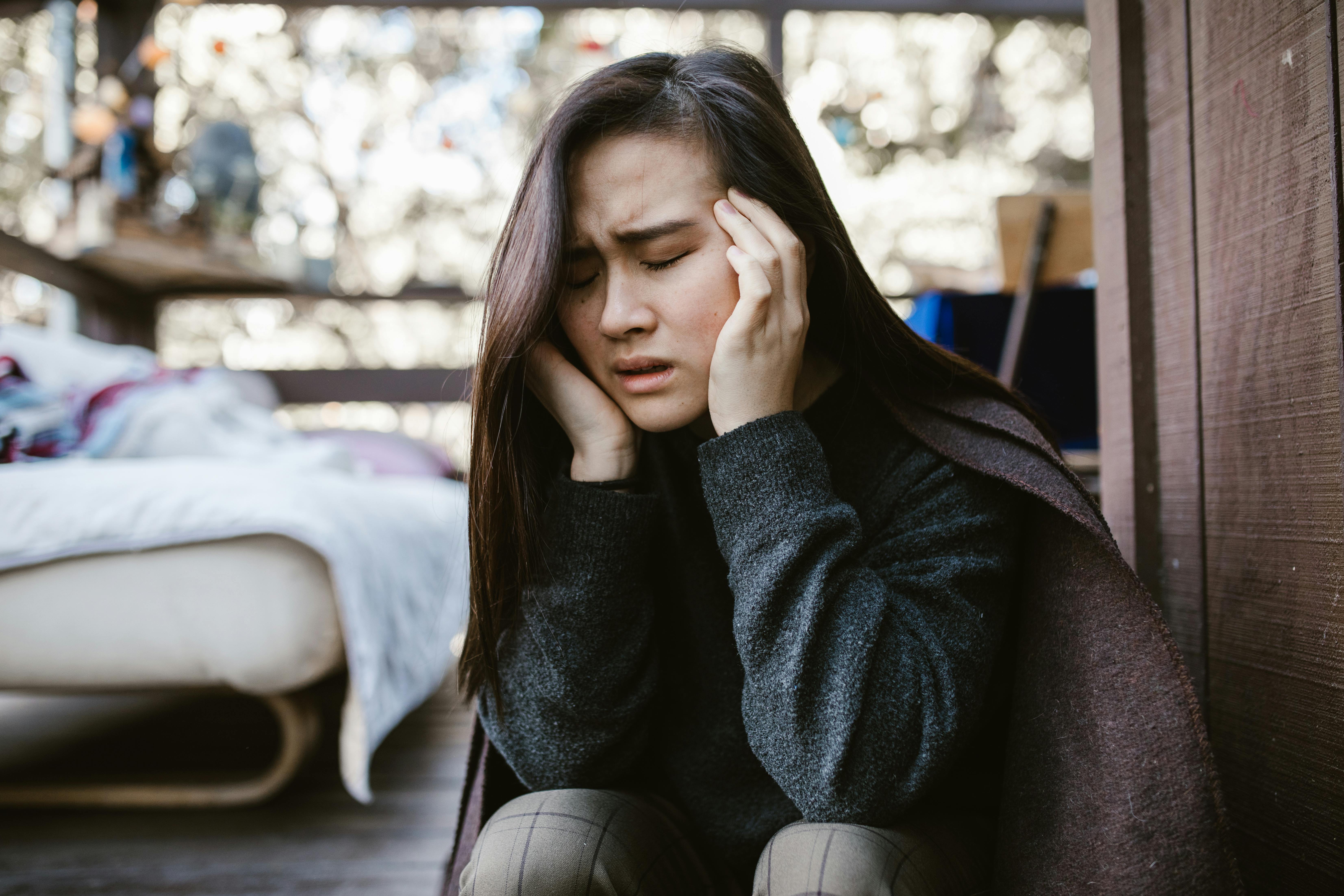
Severe depression is specified when the number of symptoms observed is substantially more than what is required to make a diagnosis, these symptoms are seriously distressing and unmanageable, and they interfere with social or occupational functioning. This involves symptoms that significantly impair a person's ability to function in daily life, including their ability to work, maintain relationships, and care for themselves.
Hallmarks of severe depression may include:
Profound hopelessness
Inability to get out of bed
Loss of pleasure in previously-enjoyed activities (anhedonia)
Significant weight changes
Persistent thoughts of death or suicide
Psychomotor changes (moving or speaking noticeably slower or becoming agitated)
In some cases, psychotic features like delusions or hallucinations
When depression reaches this level of severity, medication is often an important part of treatment, typically combined with psychotherapy and sometimes other interventions.
First-Line Medications for Severe Depression
SSRIs
Selective serotonin reuptake inhibitors remain the most commonly prescribed antidepressants and are often where treatment begins, even for severe depression. SSRIs work by increasing serotonin levels in the brain, which helps improve mood and reduce symptoms of depression.
A landmark network meta-analysis published in The Lancet compared 21 antidepressants across 522 trials and found that, among SSRIs, escitalopram (Lexapro), sertraline (Zoloft), and paroxetine offered a particularly favorable balance of effectiveness and tolerability.
Another Lancet study revealed that fluoxetine (Prozac) demonstrated statistically significant efficacy and better tolerability in the acute treatment of MDD in children and adolescents.
SNRIs
Serotonin-norepinephrine reuptake inhibitors like venlafaxine (Effexor) and duloxetine (Cymbalta) target both serotonin and norepinephrine, which may provide additional benefit for some patients with severe symptoms.
Venlafaxine, particularly at higher doses, has shown modest evidence of being more effective than SSRIs for severe or melancholic depression. Although earlier research suggested that venlafaxine was significantly more effective than SSRIs, more recent meta-analyses show no significant difference in response between venlafaxine and SSRIs, with the exception of fluoxetine. Venlafaxine also comes with a higher side effect burden, including elevated blood pressure at higher doses.
Duloxetine is another SNRI that is comparable in efficacy to SSRIs, although it has lower acceptability and tolerance than escitalopram and venlafaxine, possibly due to adverse effects.
Mirtazapine (Remeron)
Mirtazapine works differently from SSRIs and SNRIs, targeting norepinephrine and specific serotonin receptors. This atypical antidepressant is often chosen for patients who also struggle with insomnia and poor appetite, as it tends to be sedating and can stimulate appetite.
Mirtazapine may work faster than SSRIs for some people and is shown to be effective in treating patients with co-existing depression and anxiety, as well as those with melancholic depression and treatment-resistant depression. It has a favorable side-effect profile compared to other antidepressants.
Options for Treatment-Resistant Depression
When a patient has tried at least two adequate antidepressant trials without sufficient improvement, the condition is generally classified as treatment-resistant depression (TRD). This subtype of major depressive disorder affects an estimated 30 percent of people diagnosed with the condition. For these patients, several strategies can help.
Augmentation With Atypical Antipsychotics
Adding an atypical antipsychotic to an existing antidepressant is one of the best-studied strategies for treatment-resistant depression. A systematic review of pharmacological treatments for TRD found that augmentation with second-generation antipsychotics like quetiapine or aripiprazole is effective and may be considered as an alternative to antidepressant monotherapy.
Combined treatment involving olanzapine, an atypical antipsychotic, and fluoxetine was one of the first treatments to be approved for TRD, although metabolic side effects are common.
Lumateperone (Caplyta) was also recently approved as an adjunctive treatment for major depressive disorder in adults. A Phase-3 open-label study on the long-term safety of lumateperone adjunctive to antidepressant therapy showed this treatment to be generally safe and well-tolerated with mild to moderate side effects early in the course of treatment. Unlike with certain antipsychotics, long-term adjunctive lumateperone treatment was associated with a low risk of metabolic effects.
Overall, antipsychotics can provide meaningful improvement, though some come with their own side effects, including metabolic changes and movement disorders.
Lithium Augmentation
Adding lithium to an antidepressant regimen is one of the oldest and most well-established augmentation strategies. Lithium has robust evidence for improving response in patients who have not responded to antidepressants alone, and it is widely recognized for its ability to prevent relapse and recurrence of mood episodes and reduce suicide risk. Monitoring blood levels and thyroid function is required.
Esketamine (Spravato)
Esketamine nasal spray represents one of the most significant advances in depression treatment in decades. As Johns Hopkins explains, esketamine works on the glutamate system rather than serotonin, providing a completely different mechanism of action. Some patients experience improvement within hours rather than weeks.
Esketamine was FDA-approved in 2019 for treatment-resistant depression as an adjunctive treatment with conventional antidepressants. More recently, esketamine received approval as a monotherapy for TRD. Because of its potential for misuse and side effects, it must be administered under medical supervision in a certified healthcare setting.
Combination Antidepressant Strategies
Combining two antidepressants with different mechanisms of action is another common approach. For example, pairing an SSRI with bupropion (Wellbutrin) or adding mirtazapine to an SSRI or SNRI can target multiple neurotransmitter systems simultaneously.
Tricyclic Antidepressants and MAOIs
Older medication classes like tricyclic antidepressants (TCAs) and monoamine oxidase inhibitors (MAOIs) can be effective for severe and treatment-resistant depression. Amitriptyline and nortriptyline are among the most commonly used TCAs.
MAOIs like phenelzine and tranylcypromine are sometimes considered when other options have failed. Both classes require more careful monitoring due to their side effect profiles and potential for dangerous interactions, including hypertensive crisis.
Beyond Medication: Other Treatment Approaches
For patients with severe or treatment-resistant depression, medication is often just one component of a comprehensive treatment plan. Electroconvulsive therapy (ECT) is regarded as an effective acute and maintenance intervention, particularly when rapid response is needed.
Transcranial magnetic stimulation (TMS) is an FDA-approved, non-invasive option that has also shown effectiveness. Psychotherapy, particularly CBT and interpersonal therapy, plays an important role alongside medication for most patients.
The Bottom Line
Severe depression and treatment-resistant depression require a personalized and proactive treatment approach. While there is no single "strongest" antidepressant that works for everyone, the range of available options, from SSRIs (escitalopram, sertraline, paroxetine) and SNRIs (venlafaxine and duloxetine) to augmentation strategies (antipsychotics, lithium, bupropion) and newer treatments like esketamine, means that many people can find meaningful relief with the right combination of treatments.
Working With a Provider to Find the Right Approach
Finding the right treatment for severe depression often requires patience and persistence. It can take several tries with different medications or combinations before landing on the approach that works best. A qualified psychiatric provider who understands the full range of treatment options is essential.
Blossom Health connects you with online psychiatric providers who specialize in helping patients with complex depression find the right treatment approach, from first-line medications to advanced strategies for treatment-resistant cases. Our providers can guide you through the process with regular follow-up and ongoing medication management.
Medical Disclaimer
This article is for informational purposes only and is not a substitute for professional medical advice. Always consult with a qualified healthcare provider for personalized medical guidance and treatment recommendations.
Sources
Zimmerman, M., Balling, C., et al. (2018). Understanding the severity of depression: Which symptoms of depression are the best indicators of depression severity? Comprehensive Psychiatry, 87, 84-88. https://www.sciencedirect.com/science/article/abs/pii/S0010440X18301603
Cipriani, A., Furukawa, T. A., Salanti, G., et al. (2018). Comparative efficacy and acceptability of 21 antidepressant drugs for the acute treatment of adults with major depressive disorder: a systematic review and network meta-analysis. Lancet (London, England), 391(10128), 1357–1366. https://pmc.ncbi.nlm.nih.gov/articles/PMC5889788/
Cipriani, A., Zhou, X., Del Giovane, C., et al. (2016). Comparative efficacy and tolerability of antidepressants for major depressive disorder in children and adolescents: a network meta-analysis. Lancet (London, England), 388(10047), 881–890. https://pubmed.ncbi.nlm.nih.gov/27289172/
Stahl, S.M., Entsuah, R., Rudolph, R.L. (2002). Comparative efficacy between venlafaxine and SSRIs: a pooled analysis of patients with depression. Biological Psychiatry, 52(12), 1166-1174. https://www.sciencedirect.com/science/article/abs/pii/S0006322302014257
de Silva, V. A., & Hanwella, R. (2012). Efficacy and tolerability of venlafaxine versus specific serotonin reuptake inhibitors in treatment of major depressive disorder: a meta-analysis of published studies. International clinical psychopharmacology, 27(1), 8–16. https://journals.lww.com/intclinpsychopharm/abstract/2012/01000/efficacy_and_tolerability_of_venlafaxine_versus.2.aspx
Cipriani, A., Koesters, M., Furukawa, T. A., Nosè, M., Purgato, M., Omori, I. M., Trespidi, C., & Barbui, C. (2012). Duloxetine versus other anti-depressive agents for depression. The Cochrane database of systematic reviews, 10(10), CD006533. https://pubmed.ncbi.nlm.nih.gov/23076926/
Alam, A., Voronovich, Z., & Carley, J. A. (2013). A review of therapeutic uses of mirtazapine in psychiatric and medical conditions. The primary care companion for CNS disorders, 15(5), PCC.13r01525. https://pmc.ncbi.nlm.nih.gov/articles/PMC3907331/
McIntyre, R. S., Alsuwaidan, M., Baune, B. T., et al. (2023). Treatment-resistant depression: definition, prevalence, detection, management, and investigational interventions. World psychiatry : official journal of the World Psychiatric Association (WPA), 22(3), 394–412.
Al-Harbi K. S. (2012). Treatment-resistant depression: therapeutic trends, challenges, and future directions. Patient preference and adherence, 6, 369–388. https://pmc.ncbi.nlm.nih.gov/articles/PMC3363299
Voineskos, D., Daskalakis, Z. J., & Blumberger, D. M. (2020). Management of Treatment-Resistant Depression: Challenges and Strategies. Neuropsychiatric disease and treatment, 16, 221–234. https://pmc.ncbi.nlm.nih.gov/articles/PMC6982454
Ruberto, V. L., Jha, M. K., & Murrough, J. W. (2020). Pharmacological Treatments for Patients with Treatment-Resistant Depression. Pharmaceuticals (Basel, Switzerland), 13(6), 116.
Durgam, S., Earley, W. R. et al. (2026). Long-term adjunctive lumateperone 42 mg treatment in major depressive disorder: Results from a 6-month open-label extension study. European Neuropsychopharmacology, 108, 112786. https://www.sciencedirect.com/science/article/pii/S0924977X26000271#sec0011
Rush, A. J., Fava, M., et al. (2004). Sequenced treatment alternatives to relieve depression (STAR*D): rationale and design. Controlled Clinical Trials, 25(1), 119-142. https://www.sciencedirect.com/science/article/abs/pii/S0197245603001120
Proaños, N. J., Bustos, R. H., Aconcha, M., Guerrero, I., Martinez, L. A., Berk, M., & Dodd, S. (2025). Lithium Augmentation in Treatment-Resistant Depression: A Qualitative Review of the Literature. Pharmacotherapy, 45(10), 688–701.
Johns Hopkins Medicine. (n.d.). Esketamine for treatment-resistant depression. https://www.hopkinsmedicine.org/health/treatment-tests-and-therapies/esketamine-for-treatment-resistant-depression
Bhavya, Shetty, S., & Sadasivam, B. (2025). A New Era for Esketamine in Managing Treatment-Resistant Depression: A Systematic Review of Its Use From Adjunct to First-Line Therapy. Cureus, 17(9), e91829. https://pmc.ncbi.nlm.nih.gov/articles/PMC12579747