Grapefruit and Antidepressants: Which Interactions Matter and Why
Author:
Blossom Editorial

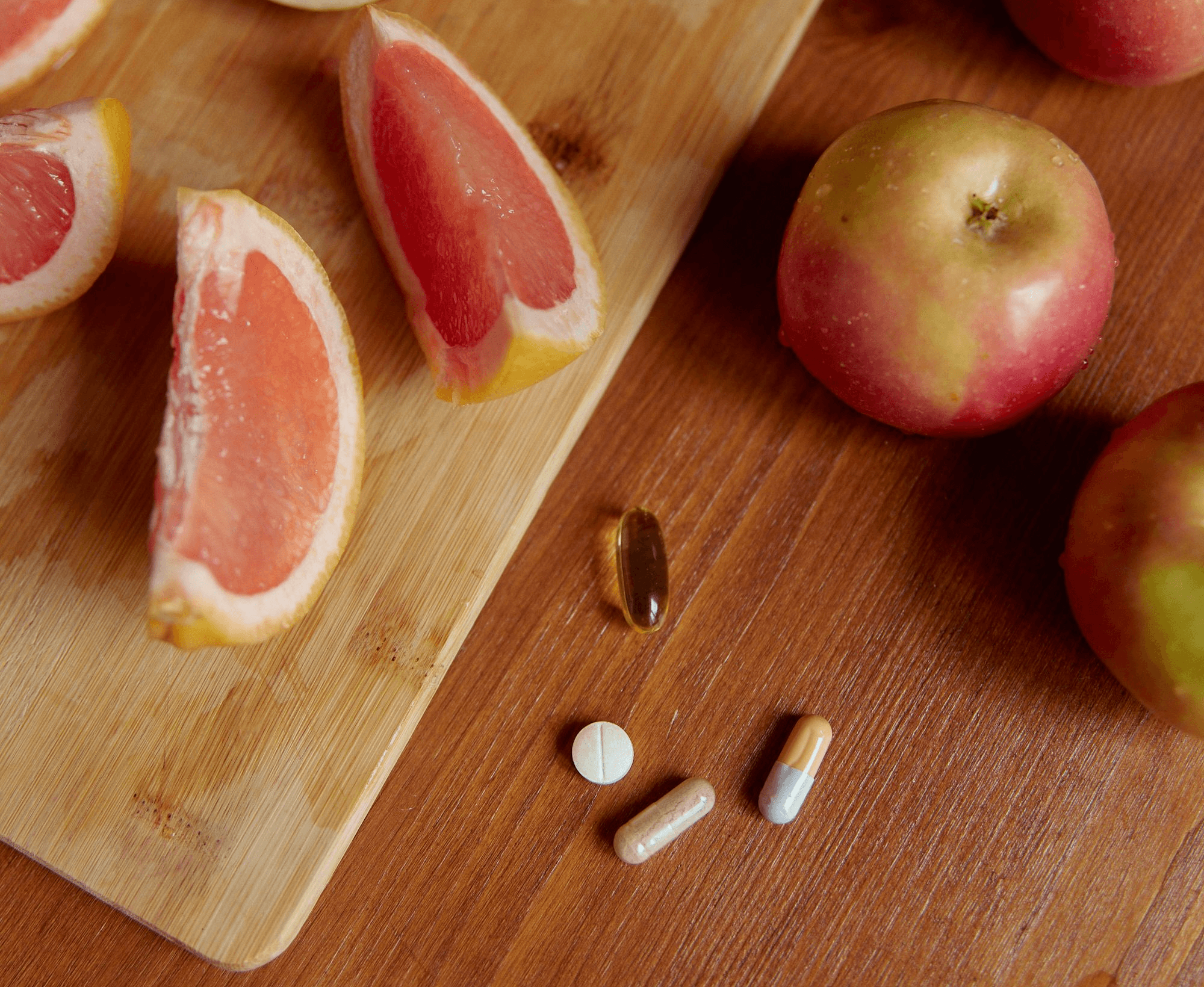

For most people, grapefruit is a healthy food. However, it can interact with some medications and affect how much of it reaches the bloodstream.
The fruit blocks an enzyme your body uses to break down certain drugs, which can let more of the medication build up in your blood.
Knowing whether your antidepressant is affected and what to do about it can help you stay safe without giving up a food you enjoy.
Key Takeaways
Grapefruit blocks a key drug-processing enzyme: It can keep your body from breaking down certain medications, and the effect can last more than a day, so spacing out your grapefruit and your pill may not reliably avoid it.
Only some antidepressants are affected: Some selective serotonin reuptake inhibitors (SSRIs), including sertraline (Zoloft) and fluvoxamine (Luvox), and certain anti-anxiety medicines such as buspirone and some benzodiazepines could have significant interactions.
Ask before you mix: If you take antidepressants, check with your prescriber or pharmacist before having grapefruit, and never stop or change a medication on your own.
What is the Grapefruit-Drug Interaction?
Grapefruit and grapefruit juice contain natural compounds called furanocoumarins and flavonoids. These compounds block an enzyme in your small intestine called CYP3A4, which helps break down many medications before they reach your bloodstream.
According to the U.S. Food and Drug Administration (FDA), when grapefruit blocks the CYP3A4 enzyme, more of the drug can pass into your blood and stay there longer, sometimes reaching levels that are higher than intended.
This matters because CYP3A4 helps break down a large share of prescription drugs. The FDA notes this single enzyme is involved in breaking down a wide range of common medications, so a food that blocks it can affect more than one type of treatment.
Grapefruit can also affect transporter proteins that help move medications into and out of your cells. In some cases, this can reduce the amount of medication absorbed, which may make it less effective. The overall result depends on the specific drug.
Why the Effect Can Last for More Than a Day
A common myth is that you can avoid the interaction by taking your medication and eating grapefruit at different times of the day. Research does not support this. A 2025 review on grapefruit and psychiatric medications describes how furanocoumarins essentially shut down the enzyme until your body makes new copies of it, a process that can take a day or longer.
One glass of grapefruit juice could lead to a 47% drop in enzyme levels, which means even a single serving of grapefruit can affect how a sensitive medication is processed for many hours afterward. The size of the effect depends on the person, the drug, how much enzyme their body produces, and how much grapefruit is consumed.
How Grapefruit Affects Antidepressants and Other Drugs
The possibility of grapefruit interaction depends on the specific medication you are taking. The sections below cover which antidepressants are affected, how large the effect can be, which drugs are less likely to interact, and the non-psychiatric medications worth watching.
Which Antidepressants and Related Medications Interact With Grapefruit?
Not all antidepressants are affected because not all are broken down by the enzyme CYP3A4. The medications most likely to interact are those that rely heavily on this enzyme. Mental health medications that may be affected include:
Sertraline (Zoloft): Grapefruit can raise sertraline blood levels because this SSRI is partly processed by CYP3A4, which may increase side effects such as drowsiness or dizziness.
Buspirone (Buspar): This anti-anxiety medication tends to be strongly affected. In the earlier review, grapefruit was found to raise buspirone blood levels by more than fourfold, with the effect lasting about 24 hours.
Clomipramine (Anafranil): The tricyclic antidepressant clomipramine is partly metabolized by the CYP3A4 enzyme and could lead to a potential interaction with grapefruit.
Some sedatives and anti-anxiety drugs: Certain benzodiazepines and anticonvulsant medications, including diazepam (Valium), midazolam, triazolam, and carbamazepine, are also processed by CYP3A4 and can be affected.
If you take any of these, it is worth having a conversation with your provider before making grapefruit a regular part of your diet.
How Strong is the Effect? What the Research Shows
The extent to which grapefruit interacts with a medication depends on the specific drug. Different drugs can be impacted differently by grapefruit consumption:
Buspirone: Blood levels may rise more than fourfold when taken with grapefruit juice, one of the largest such effects measured.
Diazepam (Valium): Total drug exposure may roughly triple.
Carbamazepine: This mood-related medication shows a modest rise of about 1.4 times, but the effect could still be significant at higher doses.
Remember, for medications affected by grapefruit, the interaction can last for 24 hours or more. This means taking grapefruit and your medication at different times of the day may not prevent the interaction.
Other antidepressants not listed here can also interact with grapefruit, although it is likely that they aren’t entirely dependent on the CYP3A4 enzyme for metabolism.
At the same time, this doesn’t mean grapefruit can be safely combined with such medications. Individual factors affect how a certain medication is metabolized in your body, including other prescription drugs or supplements, underlying medical conditions, genetic variability, and lifestyle factors.
Beyond Antidepressants: Other Medications to Watch
Grapefruit interactions are not limited to mental health medications. Because CYP3A4 helps process several drugs, the same effect can apply to treatments for other conditions.
A large study notes that some of the most significant interactions involve the transplant drug cyclosporine, certain calcium channel blockers for blood pressure, and some statins. Classes that can be affected include:
Certain cholesterol-lowering statins: Some statins, such as simvastatin and lovastatin, can accumulate and increase the risk of muscle-related side effects. Other statins, like pravastatin and atorvastatin, can also be affected.
Some blood pressure and heart medications: Certain calcium channel blockers and heart rhythm drugs are processed by CYP3A4, and their effects could be impacted by grapefruit
Organ transplant (anti-rejection) drugs: Medications such as cyclosporine and tacrolimus can reach higher levels in the body with grapefruit consumption
Some other psychiatric medications: Certain antipsychotics, such as haloperidol, and the hypnotic medication, zolpidem, can be affected by grapefruit consumption as well. There are individual instances of people treated with drug combinations, including trazodone + fluoxetine and sertraline + zolpidem, as well as prescriptions of agomelatine, duloxetine, escitalopram, and mirtazapine, where significant grapefruit interactions have been reported.
This is not a complete list, which is why a personal review of everything you take is the most reliable approach.
How Much Grapefruit is Too Much?
There is no single safe amount that applies to everyone. The FDA notes that the severity of a grapefruit interaction varies depending on the person, the specific drug, and the amount consumed.
For some medications, even one glass of grapefruit juice may be enough to cause a noticeable change in blood levels. Whole grapefruit, freshly squeezed juice, and frozen concentrate can all have an effect. Some related citrus fruits, such as Seville (sour) oranges and pomelos, contain similar compounds.
What to Do if You Take Antidepressants
You do not necessarily have to avoid grapefruit forever. The right step is to get personalized guidance rather than guessing. Practical steps include:
Read your medication guide: Prescribing information often lists grapefruit warnings directly.
Ask your pharmacist: Pharmacists can quickly check whether your specific antidepressant interacts with grapefruit.
Tell your prescriber about your diet: Mention regular grapefruit or citrus intake during appointments so it can be factored into your care.
Watch for new side effects: If you notice unusual drowsiness, dizziness, or other symptoms after eating grapefruit, contact your provider.
Mental health medication management is most effective when it is personalized and closely monitored. Blossom Health connects you with board-certified psychiatrists who can help you choose the right medication, manage side effects, identify potential drug interactions, and make adjustments as your needs change.
With convenient online appointments and insurance-covered care, you can receive expert guidance and ongoing support throughout your treatment journey.
Medical Disclaimer
This article is for informational purposes only and is not a substitute for professional medical advice. Always talk with your physician or another qualified healthcare provider about any questions you have regarding a medical condition or your medications. If you are experiencing a mental health crisis, contact the 988 Suicide and Crisis Lifeline by calling or texting 988.
Sources
U.S. Food and Drug Administration. Grapefruit Juice and Some Drugs Don’t Mix. fda.gov
Valle DB, Cox DJ, Carr BR. 2025. Impact of Grapefruit Consumption on Plasma Concentrations of Psychiatric Medications through CYP3A4 Inhibition. Eur Psychiatry. ncbi.nlm.nih.gov
Harvard Health Publishing. (2021, March 30). Grapefruit and medication: A cautionary note. Harvard Medical School. https://www.health.harvard.edu/healthy-aging-and-longevity/grapefruit-and-medication-a-cautionary-note
Abdelmawla, N., Langley, R. W., & Szabadi, E. (2019). Interactions of antidepressants, mood-stabilisers and antipsychotics with food: A systematic review. Human Psychopharmacology: Clinical and Experimental, 34(4), e2708. https://doi.org/10.1002/hup.2708
Siwek, M., Krupa, A.J., & Woron, J. (2024). Interactions between grapefruit juice and psychotropic medications: An update of the literature and an original case series. Expert Opinion on Drug Metabolism & Toxicology, 20(8), 483–497. https://doi.org/10.1080/17425255.2024.2352468
Kane GC, Lipsky JJ. 2000. Drug–Grapefruit Juice Interactions. Mayo Clinic Proceedings. pubmed.ncbi.nlm.nih.gov
StatPearls (NCBI Bookshelf). Antidepressants. ncbi.nlm.nih.gov
Mayo Clinic. Selective Serotonin Reuptake Inhibitors (SSRIs). mayoclinic.org
National Institute of Mental Health (NIMH). Mental Health Medications. nimh.nih.gov
Cleveland Clinic. SSRI vs. SNRI: What’s the Difference? clevelandclinic.org