What to Bring to a Psychiatry Appointment: A Complete Checklist
Author:
Blossom Editorial



Your first psychiatry appointment is a chance to give your provider a clear picture of what you’ve been experiencing. A little preparation beforehand can make that conversation more productive. Bringing a few key details with you helps your provider understand your history and spend more time focusing on what you need.
This checklist covers what to gather for a first appointment, what changes for a virtual visit, and what is worth bringing to follow-ups once treatment is underway.
Key Takeaways
Bring your medication list: Bringing your medication list to your appointment can help your provider better understand your condition and needs.
Written notes beat memory: Your symptoms may fluctuate, and it is genuinely hard to summarize several weeks accurately on the spot. Even a few dated notes can give your provider something more reliable to work from.
Bring the essential details: Insurance card, photo ID, and pharmacy information keep the appointment focused on your care rather than on paperwork or a prescription that cannot be sent.
What to Bring to Your First Psychiatry Appointment
You don’t need to have everything prepared to be seen, and it’s completely okay if you arrive without any of these. Still, bringing a few key details listed below can save time and give your provider a clearer picture of your needs.
A Complete List of Medications and Supplements
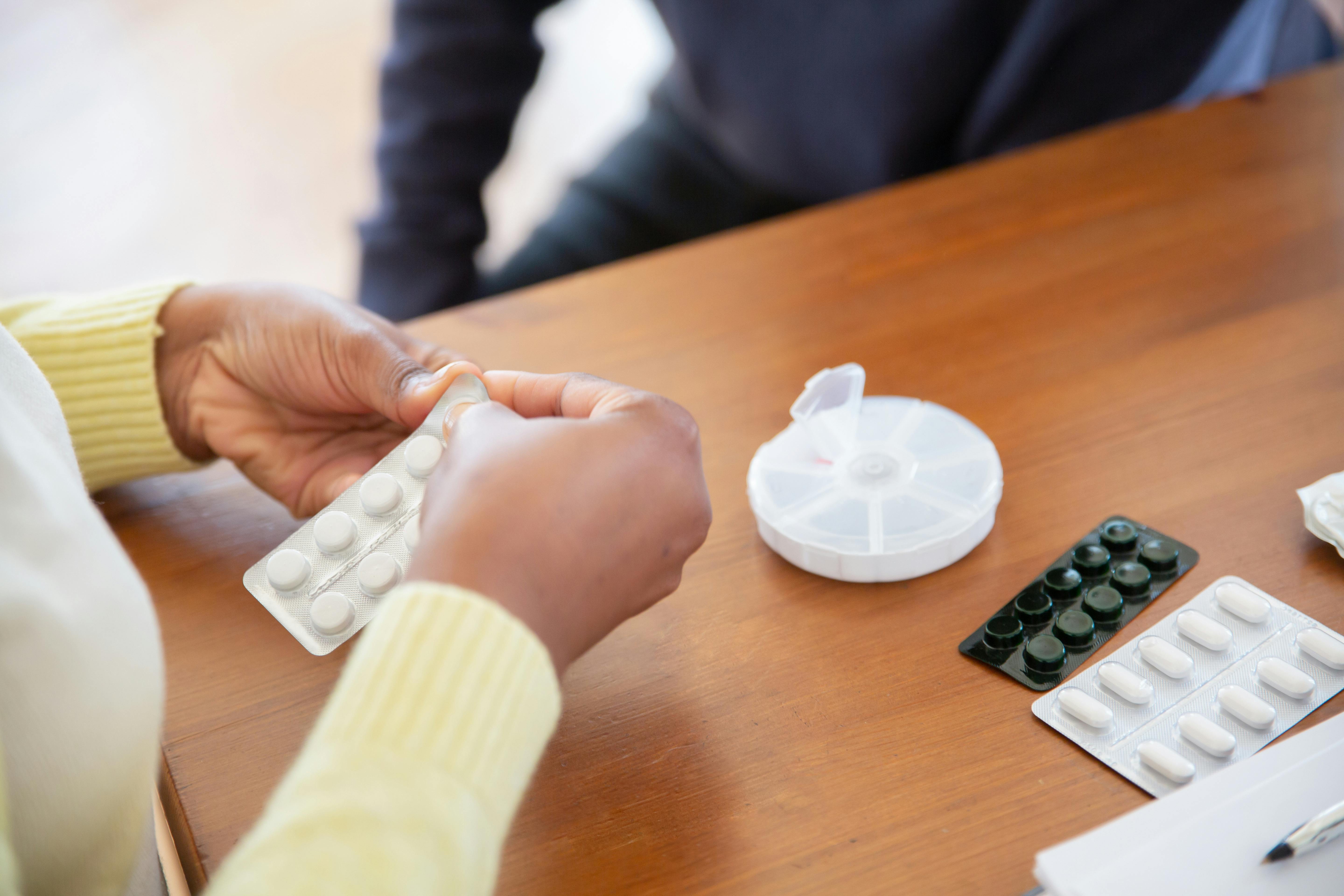
Include everything, not just psychiatric medications. Write down the name, the dose, how often you take it, and roughly when you started. Add over-the-counter products, vitamins, herbal supplements, and anything you take occasionally rather than daily. If writing a list feels like too much, bringing the actual bottles works just as well and is often more accurate. Include every psychiatric medication you have tried in the past, the approximate dose, roughly how long you took it, why you stopped, whether there were any side effects or benefits, and the cost.
Knowing whether a particular class of medication already failed or worked for you, or that a specific side effect made one intolerable, meaningfully narrows the options your provider will consider. If you do not remember details, a rough version is still better than nothing.
Your Insurance Card and Photo ID
Practices need these to verify coverage and confirm identity. For telehealth appointments, have both available to photograph or upload during intake. It is also worth confirming your copay in advance so the cost is not a surprise during billing.
Symptom Notes or a Simple Log
A few weeks of informal notes give your provider a much better picture than a summary produced under pressure. You do not need a formal tracker. Dated entries covering what you noticed, how bad it was, and what was happening around that time are enough.
Useful things to note include sleep, appetite, energy, concentration, mood changes, and anything that reliably made symptoms better or worse. Many practices also use brief standardized questionnaires such as the PHQ-9 for depression, a validated nine-item measure used widely in primary care and psychiatry to gauge symptom severity and track change over time.
Relevant Medical Records and Test Results
Bring recent lab work if you have it, particularly thyroid panels, blood counts, or vitamin levels, since these can affect psychiatric symptoms and medication choices. Also bring documentation of any chronic conditions, past hospitalizations, or prior psychiatric evaluations.
If you are transferring from another provider, federal privacy rules give you the right to inspect and receive copies of your medical and billing records, so you can request them directly rather than relying on the offices to coordinate.
Family Mental Health History
Your provider may ask about your family’s mental health history because it can offer useful clues about your diagnosis and which medications might work best. If you can, make a note of relatives who have had mental health conditions, any diagnoses you know of, and whether they responded well or poorly to certain medications.
You don’t need to know every detail. Even something as simple as knowing that a parent was treated for depression can be helpful, even if you don’t know which medication they took.
A Written List of Questions
Appointment time is limited, and it is easy to leave without asking certain crucial details. Preparing questions ahead of time is always recommended
Put the most important one first, in case you run short on time. Common ones include what the diagnosis means, how long treatment usually takes to work, and what to do if side effects appear.
Your Pharmacy Information
If your provider writes a prescription, they will need the pharmacy name and location to send it electronically. Have the address or phone number available. If you use a mail-order pharmacy through your insurance, bring those details instead.
How Blossom Health Can Help
Blossom Health connects you with board-certified, licensed psychiatric providers for virtual appointments covered by in-network insurance. You enter your state and insurance plan, choose a time, and add a few details to confirm. We match you with a provider on our team based on your needs, schedule, and coverage, and most people are seen within days.
Once you are booked, the checklist above will make the visit more productive. Your first session runs about an hour by video and covers your background, history, symptoms, medications, and goals. You can get started here.
What to Bring to a Virtual Psychiatry Appointment
Your telehealth appointment covers the same important topics as an in-person visit. The main difference is preparing your space. :
A private space: Make sure you sit somewhere you can speak openly without being overheard.
Your medication bottles within reach: Keeping your medication bottles within arm’s reach is much easier than reading from a list, and you can hold a label up to the camera if a name is unclear.
Photos of your insurance card, ID, and pharmacy details: Keep your insurance and ID handy. Also make sure to keep your pharmacy details ready so you can share them without delay.
Headphones:. These improve audio quality and add privacy.
A tested connection: Join a few minutes early to check your camera and microphone.
A backup phone number: This can ensure the visit continues by phone if the video connection drops.
What to Bring to a Follow-Up Appointment
Follow-ups are usually much shorter, often 15 to 30 minutes, and focus on how your treatment is going. Bringing a small amount of information keeps that time useful:
Any medication changes since the last visit, including new prescriptions from other doctors.
Notes on side effects, including when they started and whether they have improved.
Whether you missed doses, and roughly how often. This is clinically important, and providers are not looking to judge it.
What has changed in your symptoms.
Refill needs, so you do not run out before the next appointment. Many practices handle prescription refills online.
One or two questions, prioritized in case time runs short.
Medical Disclaimer
This article is for informational purposes only and is not a substitute for professional medical advice, diagnosis, or treatment. Always seek the advice of your physician or other qualified healthcare provider with any questions you may have regarding a medical condition. If you are experiencing a mental health crisis, contact the 988 Suicide and Crisis Lifeline by calling or texting 988.
Sources
Stewart AL, Lynch KJ. 2014. Medication discrepancies despite pharmacist led medication reconciliation: The challenges of maintaining an accurate medication list in primary care. Pharm Practice (Granada). pmc.ncbi.nlm.nih.gov
Schriefer SP, Ainslie M. 2025. Medication reconciliation in an outpatient primary care setting: Barriers and opportunities. J Am Assoc Nurse Pract. pmc.ncbi.nlm.nih.gov
Barnsteiner JH. 2008. Medication Reconciliation. In: Patient Safety and Quality: An Evidence-Based Handbook for Nurses. Rockville (MD): Agency for Healthcare Research and Quality. ncbi.nlm.nih.gov
Kroenke K. Spitzer RL., Williams JB. 2001. The PHQ-9: Validity of a brief depression severity measure. J Gen Intern Med. pmc.ncbi.nlm.nih.gov
Voss RM. Das JM. 2024. Mental Status Examination. StatPearls Publishing. ncbi.nlm.nih.gov
National Institute of Mental Health. Tips for Talking With a Health Care Provider About Your Mental Health. nimh.nih.gov
National Institute of Mental Health. Mental Health Medications. nimh.nih.gov
U.S. Department of Health and Human Services. Your Medical Records. hhs.gov
American Psychiatric Association. What Is Psychiatry? psychiatry.org
Cleveland Clinic. What Is a Psychiatrist? my.clevelandclinic.org