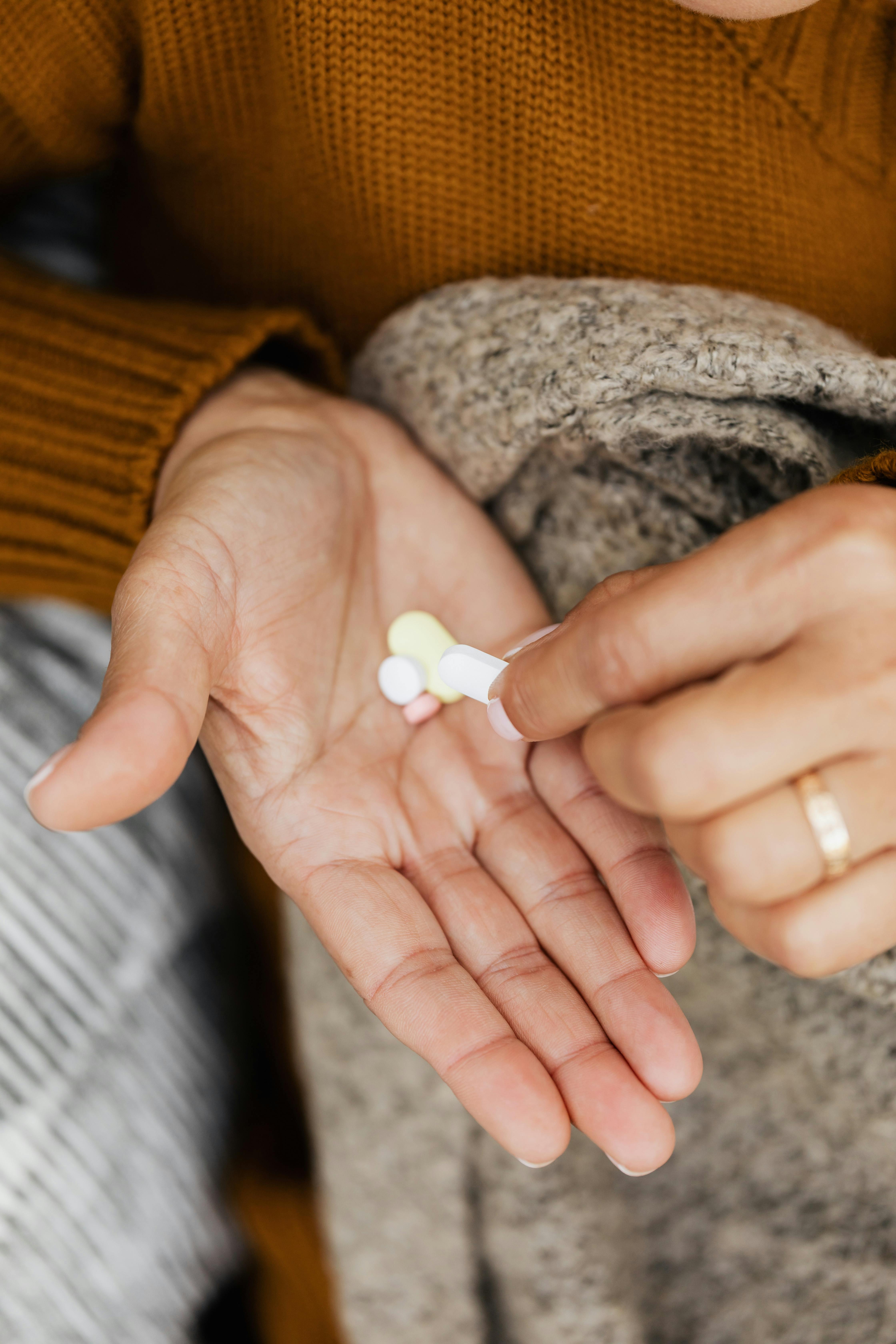
Medications for post-traumatic stress disorder (PTSD) can ease symptoms like intrusive memories, constant alertness, irritability, and trouble sleeping. Only two medications are FDA-approved specifically for PTSD, but clinical guidelines recognize a few others that may help. Knowing how these options compare can help you have a more informed conversation with your provider.
Key Takeaways
SSRIs are the main medication option: In a large Cochrane review, 58% of people taking an SSRI saw their PTSD symptoms improve, compared with 35% of people taking a placebo.
Two medications have FDA approval for PTSD: Sertraline (Zoloft) and paroxetine (Paxil) are FDA-approved, while venlafaxine (Effexor) is additionally recommended by current VA and Department of Defense guidelines as an off-label option.
Therapy is often recommended first: Trauma-focused psychotherapy is generally recommended as the preferred first-line treatment, although medication may be appropriate when therapy is unavailable, not preferred, or has not provided enough relief. Guidelines advise against benzodiazepines for PTSD, so it is important to work with a provider to find the right approach for you.
What is PTSD?
PTSD is a common mental health condition that can develop after a traumatic event, such as an accident, assault, combat, or disaster. It can affect thoughts, mood, physical sensations, and behavior, and it may raise the risk of other conditions like depression.
Most people who go through trauma have some distress afterward, and many of them recover naturally. PTSD is diagnosed when a person who has been exposed to a traumatic event has the required pattern of trauma-related symptom clusters for more than one month, and those symptoms cause significant distress or impairment. Common symptoms include:
Intrusive memories, flashbacks, or nightmares about the event
Avoiding people, places, situations, or conversations that bring up reminders
Negative changes in mood or beliefs, such as guilt, shame, or emotional numbness
Inability to recall personal information or memories (dissociative amnesia)
Heightened sense of threat, constant scanning for danger (hypervigilance), being easily startled, or having trouble sleeping and concentrating
Some people experience a related condition called complex PTSD (CPTSD) after prolonged or repeated trauma. CPTSD is recognized as a separate diagnosis in the WHO's ICD-11, but it is not a separate diagnosis in the DSM-5-TR used in the U.S. Although CPTSD is more often associated with prolonged or repeated interpersonal trauma, that type of trauma is not required for the diagnosis. This comparison of CPTSD vs. PTSD explains the differences.
How Medications for PTSD Fit Into Treatment
Medication is one of several evidence-based paths for PTSD. The 2023 VA/DoD clinical practice guideline recommends specific trauma-focused psychotherapies over medication because the overall evidence base provides stronger support for these therapies. Still, medication may be appropriate when therapy is not available, does not provide enough improvement, or is not preferred.
A provider may suggest medication for PTSD in situations like these:
Symptoms are severe enough to make it hard to start or stay in therapy
Depression or anxiety is also present
Therapy has helped, but significant symptoms remain
Trauma-focused therapy is not accessible or is not a preferred option
FDA-Approved Medications for PTSD
Both FDA-approved medications for PTSD are selective serotonin reuptake inhibitors (SSRIs), an antidepressant class that increases serotonin activity in the brain.
A 2026 Cochrane review of randomized trials supports SSRIs as first-line medications when pharmacotherapy is used for PTSD, based on moderate-certainty evidence. The review found that 58% of people on SSRIs saw an improvement in PTSD symptoms compared to 35% of those on a placebo.
Sertraline (Zoloft)
Sertraline is FDA-approved for PTSD as well as depression, panic disorder, obsessive-compulsive disorder, and several other conditions. It is widely used and available as a low-cost generic. Like other SSRIs, it takes time to build up its effect, so it helps to know how long Zoloft takes to work before judging whether it is helping.
Paroxetine (Paxil)
Paroxetine is also approved for PTSD, and its effectiveness was established in two 12-week placebo-controlled trials in adults. It is also approved for several anxiety disorders, which can make it a practical option when anxiety and PTSD overlap. This overview of Paxil for anxiety covers dosing and what to expect.
Choosing Between the Two
Although sertraline and paroxetine are both FDA-approved and have strong evidence for treating PTSD, there is not enough direct head-to-head research to say that either is consistently more effective than the other. Your provider may consider factors such as side effects, other health conditions, previous medication experiences, and how you respond to treatment.
Paroxetine may be more likely than sertraline to cause certain side effects, including weight gain and sedation, while sertraline is commonly associated with gastrointestinal side effects such as diarrhea, as well as headache and dry mouth. In PTSD trials, paroxetine was associated with more treatment withdrawals than placebo because of adverse effects, while overall adverse-event-related dropout with SSRIs was relatively low.
Paroxetine can also cause more prominent discontinuation symptoms than some other SSRIs, so it may require a particularly gradual taper when treatment is stopped.
Other Medications Used for PTSD
Beyond the two FDA-approved options, prescribers sometimes use other medications based on guideline recommendations or clinical research. Using a medication off-label is a common and legitimate practice when the evidence supports it.
Venlafaxine (Effexor XR)
Venlafaxine is a serotonin-norepinephrine reuptake inhibitor (SNRI). The 2023 VA/DoD guideline recommends venlafaxine alongside sertraline and paroxetine based on a systematic review of clinical trials. It has a distinct mechanism of action: it affects serotonin at lower doses and both serotonin and norepinephrine at higher doses. Thus, it may be considered when an SSRI has not provided enough benefit or is not a good fit.
Because venlafaxine may raise blood pressure in some people and can cause withdrawal symptoms if stopped suddenly, it is worth reviewing possible side effects with your provider.
Fluoxetine (Prozac)
The 2023 VA/DoD guideline does not include fluoxetine among its recommended pharmacotherapy options because the evidence was insufficient to recommend for or against it. Some earlier studies found potential benefit, so clinicians may consider it in selected circumstances, particularly when treating a co-occurring condition such as depression.
Prazosin
Prazosin is a blood pressure medication that has been used for PTSD-related nightmares. Evidence for prazosin is mixed. The 2023 VA/DoD guideline found insufficient evidence to recommend for or against it for PTSD-related nightmares and recommended against it for overall PTSD symptoms. More recent meta-analyses suggest it may improve nightmares and insomnia for some people, although uncertainty remains.
Mirtazapine and Amitriptyline
Mirtazapine, an antidepressant often used when sleep is a problem, and amitriptyline, an older tricyclic antidepressant, may also improve PTSD symptoms. However, the evidence for both is considered limited and of low certainty. The 2023 VA/DoD guideline found insufficient evidence to recommend for or against either medication, so they are usually not a first choice.
Medications Not Recommended for PTSD
Some medications are commonly prescribed to people with PTSD even though research does not support them. Current evidence advises caution with the following:
Benzodiazepines: The 2023 VA/DoD guideline recommends against benzodiazepines for PTSD because evidence has shown them to be ineffective for treating PTSD, with risks that tend to outweigh short-term relief. Specifically, benzodiazepines are associated with worsening PTSD symptom severity and psychotherapy outcomes. Moreover, these medications carry risks such as dependence, withdrawal, and other adverse effects.
Antipsychotics as a general PTSD treatment: The Cochrane review found no clear evidence of benefit for antipsychotics compared with placebo, based on very low-certainty evidence. Specifically, the VA/DoD guideline recommends against risperidone and suggests against quetiapine, olanzapine, and other atypical antipsychotics.
Cannabis and its derivatives: The VA/DoD guideline recommends against cannabis for treating PTSD. A 2024 systematic review found no consistent evidence that cannabis improves overall PTSD symptoms and identified some potential risks, although more controlled research is needed.
If you currently take one of these medications, talk with your prescriber before making changes. Benzodiazepines in particular should not usually be stopped abruptly because withdrawal can be serious and may require a gradual taper.
Medication vs. Therapy for PTSD
The VA/DoD guideline highlights three trauma-focused therapies with the strongest support:
Prolonged exposure (PE): Gradually and safely approaching trauma memories and avoided situations.
Cognitive processing therapy (CPT): Identifying and changing unhelpful beliefs connected to the trauma
Eye movement desensitization and reprocessing (EMDR): Working through traumatic memories using a structured therapy that includes attention to trauma-related thoughts and feelings along with bilateral stimulation, such as guided eye movements.
Clinical practice guidelines from the VA/DoD find insufficient evidence to recommend for or against routinely combining psychotherapy and medication for PTSD. That doesn’t mean therapy and medication are mutually exclusive. Some people, particularly partial responders to medication, may benefit from adding psychotherapy, depending on their symptoms, preferences, and treatment goals. So could people with complex or persistent symptoms.
In combination treatment, a psychiatrist can manage medication while a therapist provides trauma-focused care, and the two can coordinate. This explanation of the difference between a psychiatrist vs therapistt can help you decide where to start.
What to Expect When Starting PTSD Medication
Antidepressants, including the ones approved for PTSD: sertraline and paroxetine, generally take several weeks to show their full benefit, although some people notice changes in certain symptoms sooner. Early side effects such as nausea, headache, sleep changes, or restlessness often ease as your body adjusts. It helps to know what starting antidepressants typically feels like in the first few weeks.
Stay in regular contact with your prescriber, especially during the first month and after any dose change. When it is time to stop, your provider will usually recommend a gradual dose reduction rather than stopping abruptly to lower the risk of discontinuation symptoms.
When to Seek Immediate Help
PTSD can sometimes lead to a crisis that needs urgent care. Reach out for help right away if you notice:
Thoughts of suicide or harming yourself or someone else; seek urgent help if you are unable to keep yourself or another person safe
Worsening mood, agitation, or unusual behavior after starting or changing a medication
Heavy alcohol or drug use to cope with PTSD symptoms
Feeling unable to keep yourself safe
Call or text the 988 Suicide and Crisis Lifeline at 988, and veterans can press 1 to reach the Veterans Crisis Line. In an emergency, call 911.
How Blossom Health Can Help With Medications for PTSD
Blossom Health is a psychiatry-first telehealth platform, so licensed clinicians can evaluate PTSD symptoms, make a diagnosis, and prescribe medication when it is appropriate. Your first appointment is generally an hour-long video visit where your provider reviews your history, symptoms, current medications, and goals.
Your provider can help you weigh medication options, monitor side effects over time, and coordinate with a therapist if you are also in trauma-focused therapy. Blossom works with many in-network insurance plans, so check your coverage and book your first appointment when you are ready.
Medical Disclaimer
This article is for informational purposes only and is not a substitute for professional medical advice. Always seek the advice of your physician or other qualified health provider with any questions you may have regarding a medical condition or medication. If you are experiencing a mental health crisis, call or text the 988 Suicide and Crisis Lifeline at 988.
Sources
Torrico, T.J., Mann, S.K., Marwaha, R. Posttraumatic Stress Disorder. [Updated 2024 Feb 25]. In: StatPearls [Internet]. Treasure Island (FL): StatPearls Publishing; 2026 Jan-. Available from: https://www.ncbi.nlm.nih.gov/books/NBK559129/
Schnurr, P. P., Hamblen, J. L., Wolf, J., et al. (2024). The management of posttraumatic stress disorder and acute stress disorder: Synopsis of the 2023 U.S. Department of Veterans Affairs and U.S. Department of Defense clinical practice guideline. Annals of Internal Medicine, 177(3), 363–374. https://www.acpjournals.org/doi/10.7326/M23-2757
Lang, A.J., Hamblen, J.L., Holtzheimer, P., et al. (n.d.). Using the 2023 VA/DoD clinical practice guideline for management of posttraumatic stress disorder and acute stress disorder. International Society for Traumatic Stress Studies. https://istss.org/using-the-2023-va-dod-clinical-practice-guideline-for-management-of-posttraumatic-stress-disorder-and-acute-stress-disorder-ariel-j-lang-jessica-l-hamblen-paul-holtzheimer-ursula-kelly-sonya-b/
Williams, T., Phillips, N. J., Stein, D. J., & Ipser, J. C. (2026). Pharmacotherapy for post traumatic stress disorder (PTSD). Cochrane Database of Systematic Reviews, 2026(5), Article CD002795. https://www.cochrane.org/evidence/CD002795_medication-posttraumatic-stress-disorder /
U.S. Food and Drug Administration. (2023). Zoloft (sertraline hydrochloride) tablets and oral concentrate: Prescribing information. https://www.accessdata.fda.gov/drugsatfda_docs/label/2023/019839s108,20990s062lbl.pdf
Raskind, M.A., Peskind, E.R., Chow, B., et al. (2018). Trial of prazosin for post-traumatic stress disorder in military veterans. New England Journal of Medicine, 378(6), 507-517. https://pubmed.ncbi.nlm.nih.gov/29414272/
U.S. Food and Drug Administration. (2024). Paxil (paroxetine) tablets and oral suspension: Prescribing information. https://www.accessdata.fda.gov/drugsatfda_docs/label/2024/020031s083,020710s051lbl.pdf
Holtzheimer, P., & Montaño, M. (2025, November 19). Clinician's guide to medications for PTSD. U.S. Department of Veterans Affairs, National Center for PTSD. https://www.ptsd.va.gov/professional/treat/txessentials/clinician_guide_meds.asp
Forman-Hoffman, V., Middleton, J.C., Feltner, C., et al. Psychological and Pharmacological Treatments for Adults With Posttraumatic Stress Disorder: A Systematic Review Update [Internet]. Rockville (MD): Agency for Healthcare Research and Quality (US); 2018 May. (Comparative Effectiveness Review, No. 207.) Available from: https://www.ncbi.nlm.nih.gov/books/NBK525132/
Mendes, T. P., Pereira, B. G., Coutinho, E. S. F., et al. (2025). Factors impacting prazosin efficacy for nightmares and insomnia in PTSD patients - a systematic review and meta-regression analysis. Progress in neuro-psychopharmacology & biological psychiatry, 136, 111253. https://pubmed.ncbi.nlm.nih.gov/39828080/
Guina, J., Rossetter, S. R., DeRHODES, B. J., Nahhas, R. W., & Welton, R. S. (2015). Benzodiazepines for PTSD: A Systematic Review and Meta-Analysis. Journal of psychiatric practice, 21(4), 281–303. https://pubmed.ncbi.nlm.nih.gov/26164054/
Rodas, J. D., George, T. P., & Hassan, A. N. (2024). A Systematic Review of the Clinical Effects of Cannabis and Cannabinoids in Posttraumatic Stress Disorder Symptoms and Symptom Clusters. The Journal of clinical psychiatry, 85(1), 23r14862. https://pubmed.ncbi.nlm.nih.gov/38353645/
Sonis, J., & Cook, J. M. (2019). Medication versus trauma-focused psychotherapy for adults with posttraumatic stress disorder: A systematic review and meta-analysis. Psychiatry research, 282, 112637. https://pubmed.ncbi.nlm.nih.gov/31690461/
Posttraumatic stress disorder. In: StatPearls. StatPearls Publishing; 2026. https://www.ncbi.nlm.nih.gov/books/NBK559129/
Antidepressants. In: StatPearls. StatPearls Publishing; 2026. https://www.ncbi.nlm.nih.gov/books/NBK538182/
U.S. Food and Drug Administration. (September 23, 2020). FDA requiring Boxed Warning updated to improve safe use of benzodiazepine drug class. https://www.fda.gov/drugs/drug-safety-and-availability/fda-requiring-boxed-warning-updated-improve-safe-use-benzodiazepine-drug-class